
Your key just snapped in half. Part of it is in your hand. The other part is stuck inside the lock.
You can’t get in. You can’t pull it out. And every time you try to grab it with your fingers, it slides deeper into the cylinder.
This is one of the most frustrating lock problems you can have. You’re locked out, you’ve got a broken key, and you’re not sure what to do.
At MLine Locksmith, we extract broken keys from locks throughout Chester County and Delaware County. We do it safely, without damaging your lock, and we get you back inside quickly.
Call 267-609-9459 immediately if you have a broken key stuck in a lock.
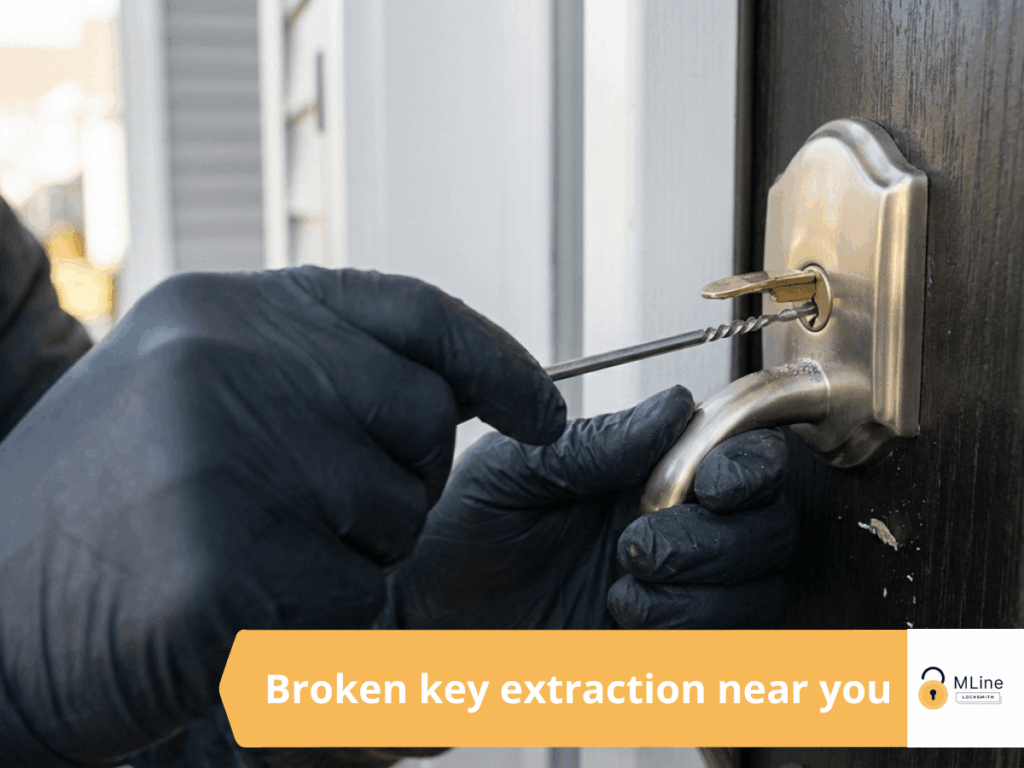
Keys don’t usually just snap out of nowhere. Here’s what causes them to break:
After years of use, the cuts on your key get rounded off and the metal wears down. Eventually, the key becomes weak enough that normal turning pressure causes it to snap.
This is the most common reason keys break. If your key is old and well-used, it’s at risk.
Not all key copies are created equal. Cheap duplicates made from soft metal or cut imprecisely are much more likely to break than quality keys cut from proper blanks.
Those $2 copies from the key kiosk at the grocery store? They break a lot.
Your lock has been getting harder to turn for weeks or months. You’ve been forcing it. One day, the key can’t take the pressure anymore and it snaps.
When a lock is sticking, the problem is the lock, not the key. Forcing a worn or misaligned lock puts enormous stress on your key.
Pennsylvania winters are brutal on keys and locks. Metal becomes more brittle in freezing temperatures. A key that would normally bend might snap instead when it’s 15 degrees outside.
We see a spike in broken keys every winter.
Your door has settled over time. The deadbolt doesn’t line up with the strike plate anymore. You have to push the door and turn the key hard to get it to lock or unlock.
All that binding and friction puts stress on your key. Eventually, something breaks, and it’s usually the key.
Your key was bent, cracked, or weakened from a previous incident. Maybe you dropped it, stepped on it, or it got caught in something. The next time you used it normally, the damaged spot gave out.
You grabbed the wrong key, tried to force it into the lock before realizing the mistake, and now it’s stuck. Trying to remove a wrong key that’s jammed can cause it to break.
Broken keys happen everywhere, but these are the most common:
This is probably the most common place for keys to break. You’re coming home, the lock is a little sticky, you turn too hard, and snap. Now you’re standing outside with half a key and no way to get in.
Keys break in car ignitions, especially in older vehicles or when the ignition cylinder is worn. Now you can’t start your car, and you might not be able to remove the broken piece without professional help.
Arriving to open your business and your key breaks in the lock. Every minute you can’t get in is time you’re not open and serving customers.
Internal office locks, file cabinet locks, desk locks. Professional settings where a broken key stops work and creates immediate problems.
The door you use to get from the garage to the house. Break a key here and you’re stuck outside or can’t lock up properly.
Small locks with thin keys. These break frequently, especially if the mailbox lock is old or corroded.
Outdoor locks exposed to weather. Metal fatigue and corrosion make these locks prone to key breakage.
When a key breaks in a lock, your instinct is to try to get it out. Here’s why most DIY attempts make things worse:
This is the worst thing you can do. Super glue doesn’t stick well enough to pull out the key fragment, but it does glue the fragment permanently inside your lock. Now you need a complete lock replacement instead of a simple extraction.
Never, ever use super glue.
Regular tweezers can’t grip the smooth edge of a broken key. All they do is push the fragment deeper into the cylinder. Once it’s deep inside, extraction becomes much harder.
Unless the key fragment is sticking way out (which is rare), pliers can’t get a good grip. You end up pushing it further in or damaging the lock trying to force the pliers inside.
Keys are made of brass or nickel-silver alloys. Magnets don’t work on them. This is a common internet “hack” that simply doesn’t work.
Lubricant makes the key fragment slippery, which makes it harder to grip and extract. It also attracts dirt and gums up your lock over time.
YouTube videos make this look easy. In reality, you’re more likely to push the fragment deeper, damage the internal pins, or break your makeshift tool off inside the lock.
Unless you’re a professional locksmith, drilling will destroy your lock. You’ll end up needing a complete lock replacement, which costs much more than extraction.
If you have part of the key still in your hand and part stuck in the lock, don’t try to turn the stuck part with pliers or the remaining piece. This can damage the lock mechanism and make extraction harder.
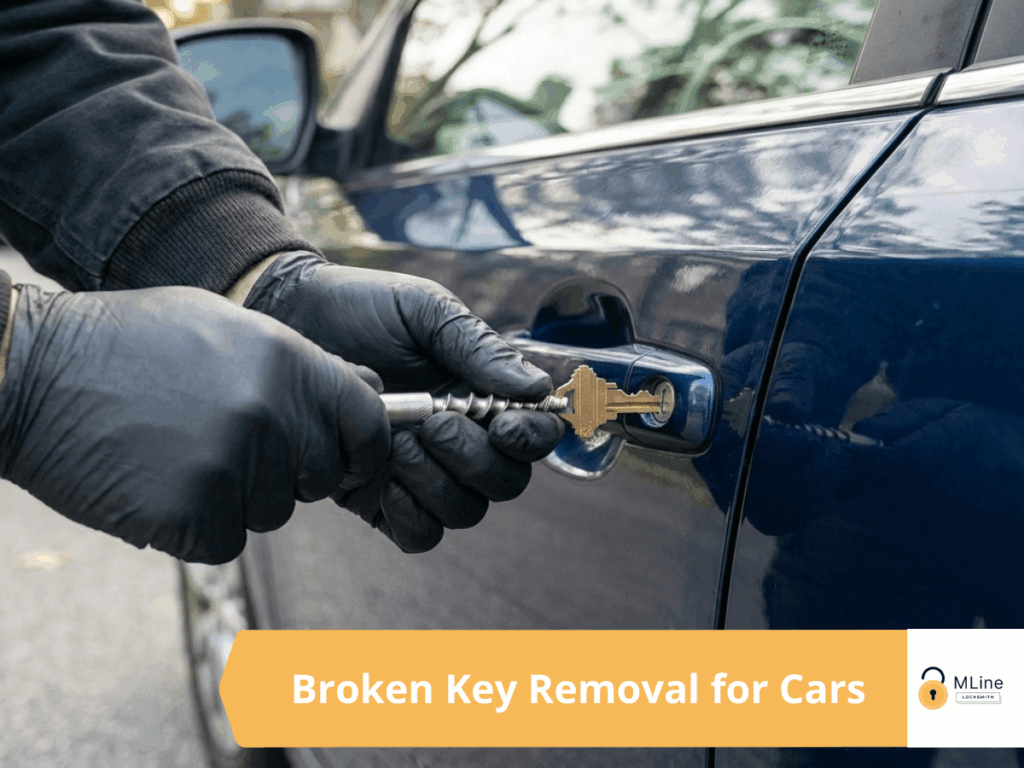
Here’s the right approach:
Don’t turn anything. Don’t push anything. Don’t try to force it.
If a small piece is protruding from the lock face, note that for the locksmith. Don’t try to pull it yourself, but knowing how much is sticking out helps.
No WD-40, no oil, no lubricant. Leave the lock dry.
Broken key extraction requires specialized tools and experience. Call us immediately at 267-609-9459.
If you have another way into your property and you have a spare key, you might be able to use the lock from the other side. But don’t try to turn anything from the side with the broken key.
When you call, let us know:
This helps us bring the right tools and prepare for the extraction.
We use specialized key extraction tools designed specifically for this problem:
These aren’t household items. They’re precision tools that let us grip and remove key fragments without damaging your lock.
In almost all cases, we extract broken keys without any damage to the lock mechanism.
The lock cylinder, the pins, the springs, everything stays intact. After extraction, your lock works exactly as it did before (or better, if we address the underlying problem).
Broken keys are emergencies, especially when they lock you out of your home, car, or business.
We’re mobile and we come to wherever you are in Chester or Delaware County.
We extract broken keys from:
Once we extract the broken key, we inspect the lock to understand why it broke:
If the key was worn out: We’ll cut you fresh keys from the lock code (not from the worn key) so your new keys work smoothly.
If the lock is sticky or misaligned: We can repair the lock, adjust the strike plate, or realign the door so it doesn’t put stress on your keys. Our lock repair services can fix sticky, worn-out locks before they break more keys.
If the lock is damaged: Sometimes lock cylinders are worn out or damaged. We can rekey or replace the cylinder while we’re there.
If you want to upgrade: This might be a good time to upgrade to better locks or add a smart lock so you don’t need keys at all. Check our lock installation services for upgrade options.
A broken key in your front door means you’re locked out of your house. This is an emergency, especially if it’s late at night, you’re alone, you have kids with you, or the weather is bad.
We treat these as priority calls and respond quickly.
Early morning before work: You’re rushing to leave, your key breaks, and now you can’t lock your door or you’re locked out. We’ll get you sorted out fast so you can get to work.
Late night arrival: You get home late, tired, and your key snaps in the lock. We’ll get you inside quickly and safely.
Between tenants: Landlord or property manager dealing with old locks and worn keys. Key breaks during turnover. We extract it and can rekey or replace the lock while we’re there.
After fighting with a sticky lock: The lock has been getting harder to use for weeks. Finally, the key breaks. We’ll extract it and fix the underlying lock problem.
For complete home locksmith needs, see our residential locksmith services.
A broken key in your business entrance lock stops operations entirely. You can’t open, customers can’t enter, employees are waiting outside.
We understand time is money. We respond quickly to commercial broken key emergencies.
Opening time: You arrive to open your store, restaurant, or office and the key breaks. Every minute you’re closed is lost revenue. We prioritize these calls.
High-traffic locks: Commercial locks get heavy use. Keys and locks wear out faster. When keys break, we extract them and can install more durable commercial-grade hardware.
Master key systems: A broken key in a master key system can complicate access. We extract the key and can rekey or adjust your system as needed.
After hours: Key breaks when you’re closing up. You can’t secure your business properly. We’ll extract the key and make sure your property is locked and secure.
For complete business locksmith solutions, check our commercial locksmith services.
Keys break in car locks and ignitions regularly, especially in older vehicles or those with high mileage on the ignition cylinder.
Car ignition: Key breaks while starting the car. Now you can’t start your vehicle, and the broken piece might be preventing you from removing the ignition.
Car door lock: Key breaks while unlocking the door. You might be locked out, or you can get in but can’t lock the door properly.
Trunk lock: Less common but still happens. Key breaks in trunk lock, and now you can’t access your trunk.
We come to wherever your car is:
No towing necessary. We extract the key on site.
Once we remove the broken key from your car, we can:
For complete automotive locksmith help, see our automotive locksmith services.
Tell us where the key broke (front door, car ignition, office, etc.), whether any part is sticking out, and if you tried anything to remove it.
A mobile locksmith is sent to wherever you are in Chester or Delaware County with specialized extraction tools.
We look at the lock, determine how deep the fragment is, and choose the right extraction method.
Using professional tools, we safely remove the broken key without damaging the lock. This usually takes 10-30 minutes.
We verify the lock still functions properly and check for any damage or wear.
We explain why the key broke and recommend solutions:
You have access again, you understand what happened, and we’ve helped prevent it from happening again.
Replace worn keys proactively
If your key is worn down, the cuts are rounded off, or it doesn’t work as smoothly as it used to, get new keys cut before it breaks.
Have keys cut from the lock code (by a professional locksmith) rather than copied from a worn key. Copies of copies get progressively worse.
Fix sticky locks before keys break
If your lock is getting harder to turn, don’t keep forcing it. That’s how keys break. Get the lock serviced or repaired before it snaps your key.
Use quality keys
Avoid cheap duplicates from kiosks and hardware store automated machines. Get keys cut by a professional locksmith using quality blanks.
Maintain your locks
Locks need occasional maintenance: cleaning, lubrication with proper graphite lubricant (not WD-40), and adjustment if they’re starting to bind.
Address door alignment issues
If your door has settled and the lock doesn’t line up properly anymore, fix it. Misalignment puts stress on keys and causes breaks.
Keep spare keys
Having spare keys means a broken key is inconvenient instead of an emergency. You can get the broken one extracted at your convenience instead of urgently.
Broken keys often happen at the worst times:
We understand these are urgent situations. We respond quickly and get you back to normal as fast as possible.
For any locksmith emergency, our emergency locksmith services are available when you need help most. For general lockout situations beyond broken keys, check our lockout services.
Insured locksmith serving Chester County and Delaware County, PA.
A broken key is frustrating, but it doesn’t have to turn into a disaster.
Don’t use super glue. Don’t use tweezers. Don’t spray WD-40. Don’t keep trying things.
Call 267-609-9459 immediately.
We’ll extract the broken key safely, without damaging your lock, and get you back inside quickly.
We serve broken key extraction throughout Chester County and Delaware County. Fast response, professional tools, and we’ll have your lock working properly again in no time.