Practical locksmith and access solutions for offices, stores, property managers, and local businesses across the Main Line and nearby communities.
People, keys, and doors change constantly at a business. An employee leaves, a vendor no longer needs access, a tenant moves out, or a lock that’s been fine for years finally starts giving you trouble.
MLine Locksmith is based in Devon and provides mobile commercial locksmith service to businesses throughout the Main Line, including Chester and Delaware Counties.
We come to your property, inspect the actual issue, explain the options that make sense for how your business uses the space, and give you the price before any work begins. If you’re not sure exactly what you need, that’s fine. Give us a call and tell us what’s going on.
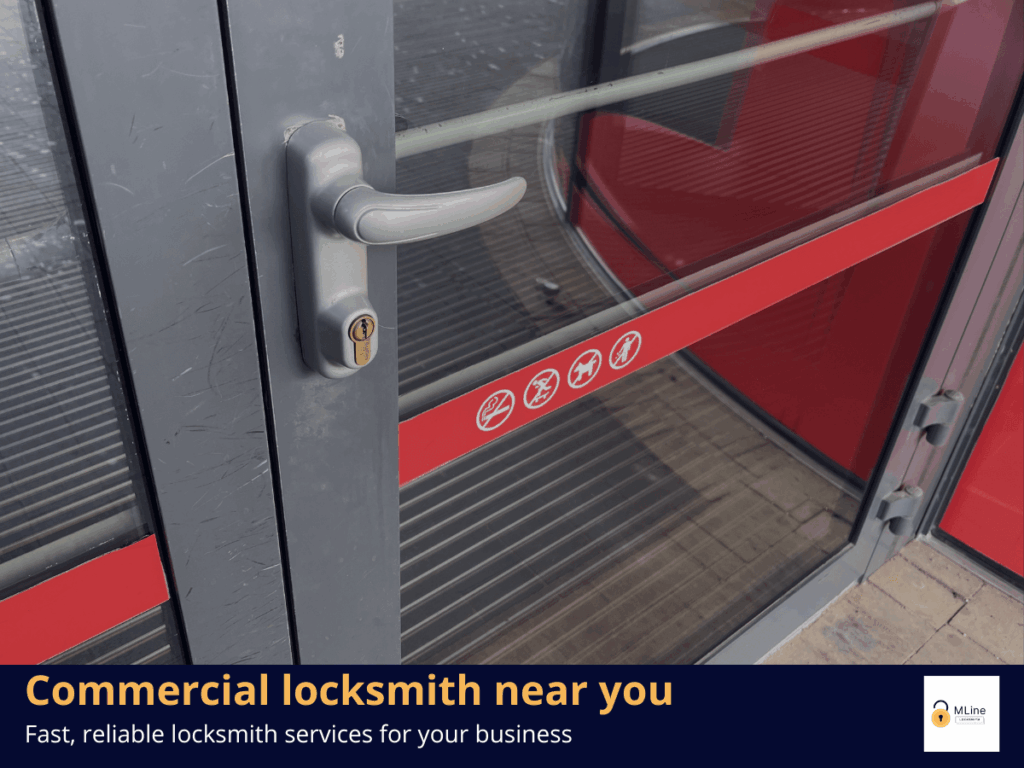
A commercial locksmith works on the locks, keys, and access arrangements that keep a business running day to day. That’s a different job than a typical home lock repair.
Commercial doors get heavier daily use, often involve more than one entry point, and usually need some way to manage who has access and when.
That can mean rekeying after a staffing change, repairing or replacing a lock that’s no longer working the way it should, setting up a master key system across multiple rooms or units, or looking at keypad, card, or fob access for a business that changes access often.
If you’re dealing with any of that, or you’re just not sure which category your issue falls into, we’ll take a look and explain what we find.
We can rekey existing locks so old keys stop working, without replacing hardware that’s still in good condition.
A commercial lock that’s sticking, binding, or not latching properly doesn’t always need to be replaced. We’ll check it before recommending anything.
When hardware is worn, damaged, or no longer suited to how a door is used, we’ll walk you through changes options.
We can set up a master key arrangement so management has broader access while staff keys stay limited to the areas they need.
For businesses that want to manage entry without rekeying every time, we’ll look at keypad, card, and fob options and explain what fits your doors.
We inspect, install, and service exit devices so they operate the way your doors are meant to be used.
If an office, storage room, or suite won’t open, we’ll come to the property and work on getting it open.
For businesses that want tighter control over who can duplicate a key, we can go over restricted-keyway and high-security hardware options.
Not sure which of these fits your situation? That’s fine. Tell us what’s happening and we’ll sort out the right approach once we’re at the property.
A commercial lock that’s harder to turn than it used to be, a latch that won’t catch consistently, or a lever that’s become loose can come from a few different sources: a worn cylinder, a door that has shifted slightly, or hardware that’s simply reached the end of its useful life.
We check the door and the hardware together rather than assuming a lock needs to be replaced just because it’s acting up. Depending on what we find, that might mean addressing deadbolts, lever locks, mortise locks, or storefront hardware.
If a business wants tighter control over who can have a key made, high-security or restricted-keyway hardware may be worth discussing, but we’ll only bring it up where it’s actually relevant to the door and how it’s used.
Businesses with more than one door or more than a few people coming and going usually need some way to manage access beyond handing out identical keys. There are generally two directions to go, and which one fits depends on the property.
A master key system keeps things in physical keys: management can access multiple areas while staff keys stay limited to the rooms or doors they actually need. Access control, using a keypad, card, or fob, lets a business change who has access without rekeying anything, which can be useful for businesses with more frequent turnover or shift-based access.
Neither option is automatically the right upgrade for every business. We’ll look at your doors, your existing hardware, and how access actually needs to work before recommending a direction.
Panic bars and other exit hardware need to operate correctly for the way a commercial door is meant to be used, and we can inspect, install, or service that hardware as part of a commercial visit.
We won’t tell you a property is up to code; that’s a separate determination outside what a locksmith visit can confirm. What we can do is make sure the hardware itself is functioning the way it’s supposed to.
If an office, storage room, or other interior space won’t open, we provide office lockout service as well. When possible, we try appropriate entry methods first based on the door and hardware in front of us, though the right approach depends on the specifics of the situation.
Emergency locksmith help for urgent issues is available during our regular operating hours, seven days a week from 7 AM to 11 PM.
Commercial calls come from a range of property types, and each one tends to use its doors a little differently, which changes what actually makes sense.
Small offices, including several along stretches like Lancaster Avenue, usually start simple: a front entrance, maybe a back door, and a handful of interior doors that can outgrow a single shared key as staff is added. A basic master key setup often solves that before it becomes a real problem.
Medical and professional practices tend to care more about which specific rooms a given staff member can enter, not just the building as a whole. That’s where access control or a more layered master key system usually earns its keep over a simple rekey.
Retail storefronts generally deal with more staff turnover and more people passing through the door in a given week, so rekeying shows up as routine maintenance more than a one-time event, alongside storefront-specific hardware that holds up to that traffic.
Restaurants run on shifting schedules and often have several entry points connecting the front of house to the kitchen and back areas, which means access needs can look different door to door, not just business to business.
Property managers and landlords are their own category. Rekeying between tenants, keeping a master key system organized across multiple units, and handling the occasional lockout is routine work for us, and we’d rather be the one locksmith you call every time than someone new re-learning your property each visit.
Whatever the property type, the underlying need is usually the same: knowing who currently has access, making sure that access still makes sense, and having hardware that works the way it should. We’ll assess your specific setup rather than apply a one-size answer to every business.
This is one of the most common reasons businesses call us. An employee leaves, a key goes missing, a vendor no longer needs access, or a tenant moves out, and you want to be sure the old key doesn’t still work.
If the existing lock hardware is in good condition, rekeying is often the practical answer. It changes the internal configuration of the lock so previous keys no longer operate it, while the hardware you already have stays in place. If the lock is worn, damaged, or doesn’t fit how the door is actually used anymore, replacement may make more sense instead.
We’ll inspect the hardware in question and explain which option fits before recommending anything. This applies whether it’s a single office door or a set of keys across a multi-unit property.
We don’t provide locksmith prices over the phone, since the actual condition of the hardware and doors affects what the job requires. Once we’ve seen it in person, you’ll have a clear price and a clear explanation before we start anything.
MLine Locksmith is based at 237 W Lancaster Ave, Suite 219, Devon, PA 19333, and provides mobile commercial locksmith service throughout the Main Line, including Chester and Delaware Counties. A few things worth knowing:
You can read more about how and why we started the business on our About Us page. Tell us what’s going on with your property, and we’ll take a look and explain your options.