Most people shopping for a deadbolt spend their time comparing locks. They read reviews, check star ratings and compare price points. That part makes sense. But here’s what doesn’t get enough attention: the lock is only half the equation.
A Grade 1 deadbolt installed into a weak door frame, with a misaligned strike plate and screws that barely reach solid wood, gives you maybe 20 percent of the protection that hardware is capable of. The frame takes the force of a kick, not the lock. And most residential door frames are not nearly as solid as they look.
That’s the starting point for how we approach every deadbolt installation at MLine Locksmith.
We treat it as a door performance job, not just a hardware swap. When we’re done, the bolt throws clean, the strike is properly anchored, and the door itself is doing its job.
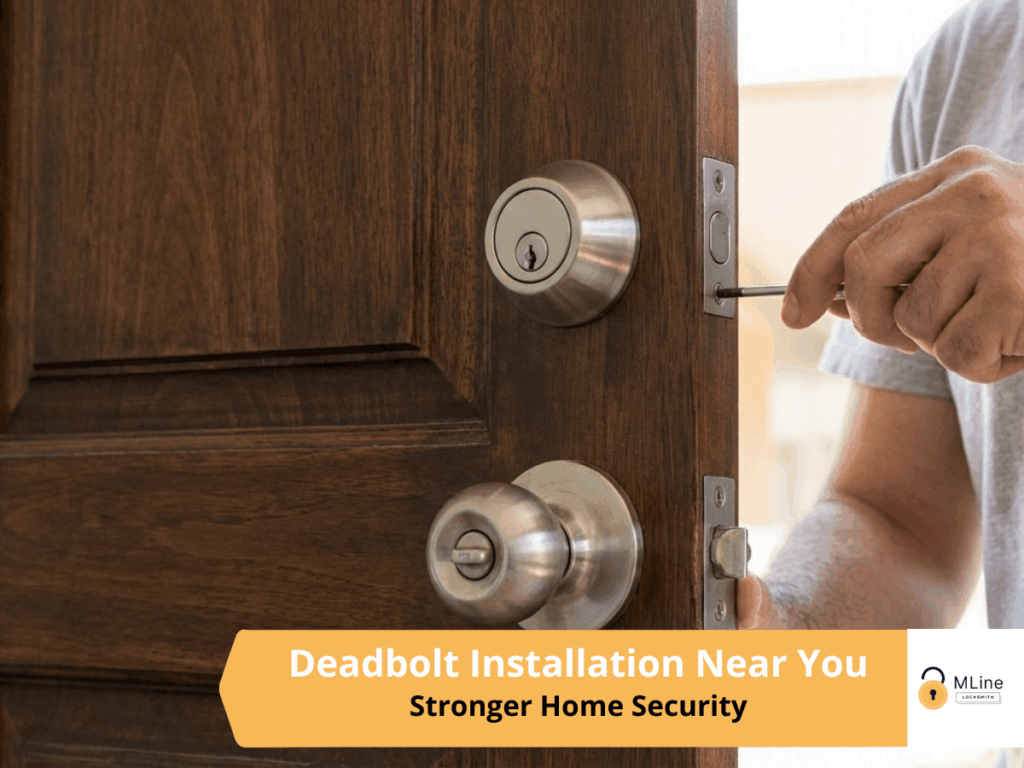
When a door gets kicked in, the failure almost never happens at the lock cylinder. It happens at the strike plate, usually because it was fastened with short screws that only catch the door casing rather than the actual framing behind it. Half an inch of wood trim is not going to stop much.
A proper installation pays close attention to this. Strike plate position needs to match the bolt precisely so there’s no drag and no gap. The screws securing the plate need to be long enough to reach the stud framing, not just the jamb surface. And the door itself needs to close and latch cleanly before any of this matters.
We see a lot of deadbolts on Main Line homes that were installed correctly in isolation but never addressed the door or frame condition. Settling happens in older homes, especially in areas like Wayne or Berwyn where you’ll find houses from the 1920s and 30s that have shifted over the decades. A bolt that fits perfectly at installation can start binding after a few years if the frame has moved even slightly. We check for all of this before we install anything.
This is the most common residential deadbolt and the right choice for most front and back doors. Key on the outside, thumbturn on the inside. It’s secure, fast to operate, and lets you exit quickly without needing a key, which matters if you ever need to leave in a hurry.
For the majority of homeowners across the Main Line, a quality single cylinder deadbolt with proper installation and reinforcement is all you need.
A double cylinder deadbolt requires a key on both sides. The reason people consider these is usually a door with glass panels nearby. The logic is that someone can’t break the glass, reach in, and turn the thumbturn to get in. That’s a real consideration.
The tradeoff is egress. If there’s a fire or emergency and you can’t find the key, you’re stuck. For that reason, we’re straightforward with customers about where these make sense and where they don’t. A door that’s a primary exit route is generally not the right place for a double cylinder. A seldom-used side entry with glass near the lock and another exit route available is a different conversation. We’ll look at your specific situation and give you an honest answer.
Standard deadbolts are adequate for most residential doors, but if you want stronger resistance to picking, drilling, or forced cylinder attacks, high security options exist. These use more complex keyways, hardened steel components, and tighter manufacturing tolerances. They’re also typically paired with key control, meaning copies can only be made by an authorized dealer.
If you’ve already upgraded to high security locks on some of your entry points and want to bring your deadbolts up to the same standard, we can match the hardware and cylinder grade across your doors.
Commercial doors see more traffic and more abuse than residential ones. Hardware that works fine on a front door used ten times a day can wear quickly on a door that cycles fifty or a hundred times. For business locations, we recommend and install deadbolts rated for commercial use, built around durability rather than just security grade.
We don’t show up, swap the hardware, and leave. Here’s what a standard deadbolt installation with MLine looks like:
We start by assessing the door. We check the thickness, the existing bore hole size, the backset measurement, and the condition of the frame and jamb. If the door isn’t closing cleanly or the frame shows damage, we address that before installing anything. There’s no point putting good hardware on a door that’s fighting itself.
If it’s a replacement, we remove the existing deadbolt carefully. Old hardware that’s been there for years can be stubborn, and forcing it damages the door. We take our time here.
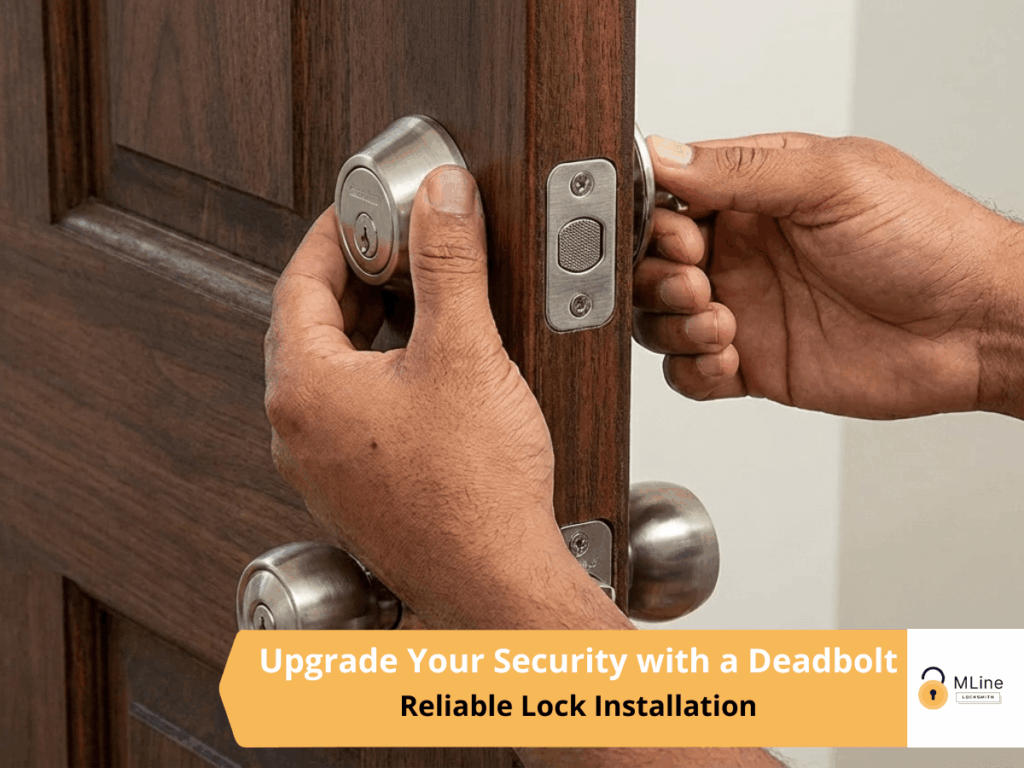
Installation follows manufacturer specs, but with our own attention to the details that specs don’t cover: correct screw torque, proper interior and exterior assembly alignment, and strike plate positioning that allows the bolt to extend fully without resistance. These are the things that determine whether a lock still operates smoothly in five years.
Once the hardware is in, we test it thoroughly. Lock and unlock with the key, lock and unlock with the thumbturn, several full open and close cycles. If anything feels off even slightly, we adjust before calling it done.
We finish with a quick walkthrough: how to maintain the lock, when to lubricate it and with what, and basic key control guidance if that’s relevant to your situation.
Not every deadbolt problem needs a new lock. We check the mechanical root cause first and recommend based on that, not on what costs more.
A lock repair usually makes sense when the bolt is stiff because the strike plate has shifted slightly, the door has swollen seasonally, or there’s minor debris in the cylinder. These are fixable problems, and fixing them properly extends the life of a lock that still has years left in it.
Replacement makes more sense when the cylinder is visibly worn or was previously compromised, the bolt mechanism is loose or unreliable, or the lock is old enough that you’d rather start fresh with something that carries a warranty. If you’ve recently moved in and don’t know who has copies of the existing keys, rekeying the locks is often the more practical and affordable step before committing to full replacement hardware.
We’ll tell you which direction makes sense honestly. If a repair gets you another five years out of solid hardware, we’ll say so.
For homeowners, the most common scenarios we handle are adding a deadbolt to a door that only has a knob lock, replacing a worn or sticky deadbolt, and upgrading hardware after moving into a new home.
If you’re doing a broader security update across multiple entry points, we can coordinate the hardware so your keys are consistent across doors and the security level matches the importance of each entry. A back gate and a front door don’t need the same grade of hardware, but they should both work reliably.
Our residential locksmith services cover everything from single door installs to full property hardware assessments, so if deadbolt installation is part of a larger project, we can handle it all in one visit.
For businesses on the Main Line, deadbolt installation usually happens in the context of a broader door hardware plan. We work with offices, retail locations, and multi-door commercial properties, and we make sure the hardware we install is appropriate for the traffic volume and security requirements of each door.
Commercial installations also often involve coordination with other hardware like door closers, latch sets, and access control components. If you’re planning a more comprehensive upgrade, our commercial locksmith team can assess the full scope and give you a plan that makes sense as a system rather than a collection of individual parts.
Insured locksmith serving Chester County and Delaware County, PA.
A deadbolt is a small investment with a big impact on your home or business security, but only when it’s installed properly. At MLine Locksmith, every installation is done by insured locksmiths who treat door fit and frame condition as seriously as the hardware itself. And every job comes with a 1-year warranty on parts and labor.
If you’re ready to install, replace, or upgrade a deadbolt anywhere on the Main Line, give us a call or send a message and we’ll get it handled.