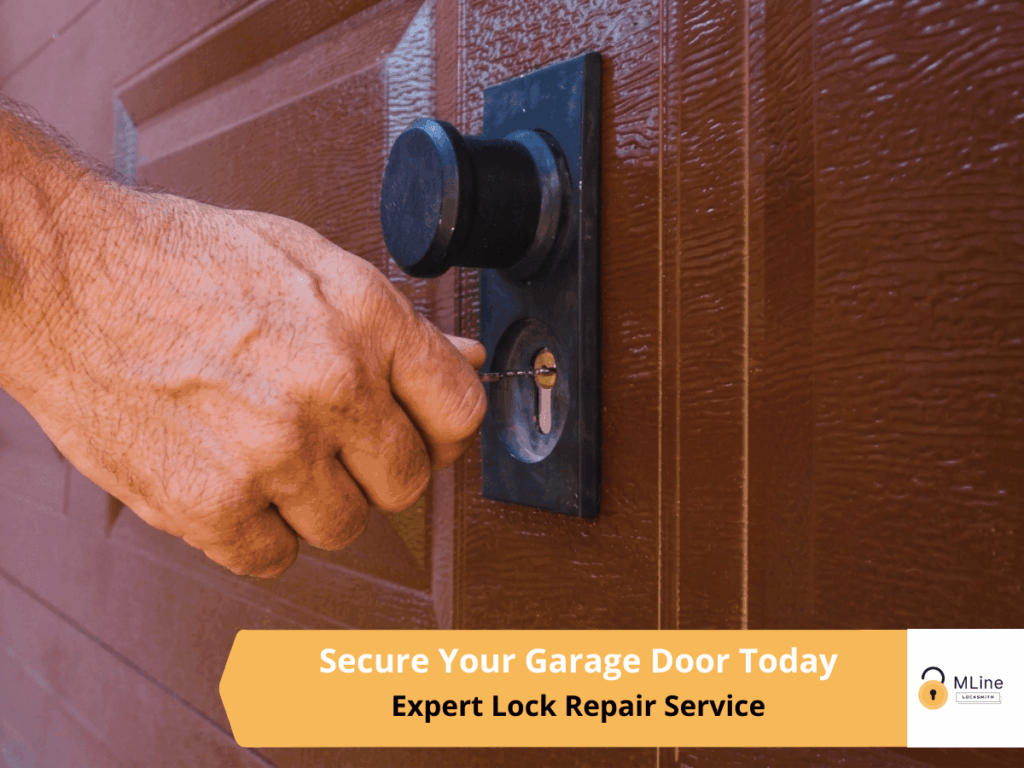
The garage tends to get overlooked in most home security conversations. People think about their front door, their deadbolts, maybe a smart lock for the main entry.
The garage comes up only when something goes wrong: a key that won’t turn, a handle that spins without engaging, a lock that’s been wobbling for months and finally stopped working entirely. By that point, the car, the tools, the bikes, and in most homes a direct interior door into the house, have all been sitting behind a lock that wasn’t doing its job.
At MLine Locksmith, garage door lock repair is one of the more common calls we get across the Main Line. The locks on garage doors take a specific kind of abuse that entry door hardware doesn’t.
Constant vibration from the door cycling up and down, direct exposure to humidity and temperature swings, and years of use without maintenance all add up. When these locks start failing, they usually do it gradually, which is part of why people don’t notice until the problem is serious.
We repair and replace garage door locking systems for residential and light commercial properties throughout the Main Line area. Every job is backed by a 1-year warranty on parts and labor, and we’re licensed and insured on every call.
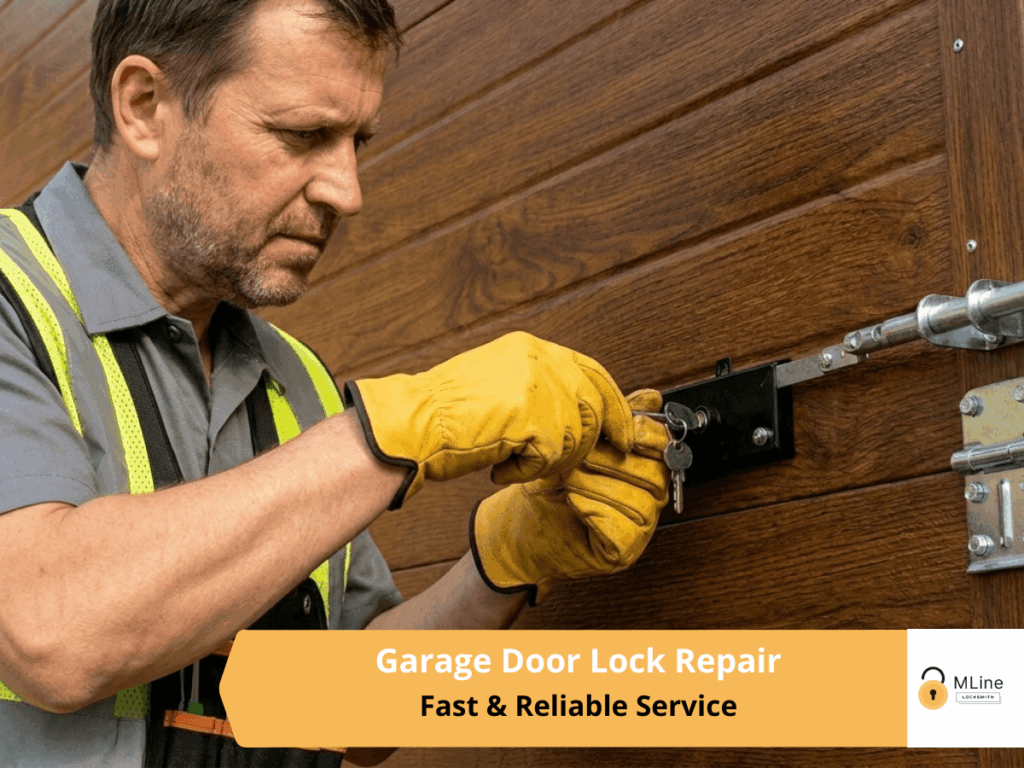
The failure patterns for garage door locks are fairly predictable once you understand how they work. Most systems rely on a cylinder connected to steel rods that extend into the door tracks on either side when locked. The cylinder, the rods, the mounting hardware, and the track guides all need to be properly aligned and in good condition for the system to work. When any one of those components degrades, the whole system starts to feel off.
In the Main Line area specifically, the seasonal shifts make this worse than in more temperate climates. Pennsylvania winters cause metal components to contract, which can throw rod alignment out just enough to make a lock stiff or incomplete in its engagement. Then summer humidity introduces rust into cylinders and slide mechanisms that weren’t properly lubricated. We see a noticeable uptick in garage lock calls every fall and every spring because of exactly this cycle.
The other big factor is vibration. Every time a garage door travels up or down, the entire door assembly shakes slightly. Over time, this works mounting screws loose, causes rod brackets to shift, and wears down internal cam mechanisms in T-handle systems faster than most homeowners expect. A lock that was installed solidly five years ago may now have enough play in the mounting that the rods don’t fully extend when you turn the key.
Rust is the third major culprit. Garages aren’t climate controlled, and in older homes across Wayne, Berwyn, and Ardmore, the combination of age and humidity exposure means we frequently find cylinders that are corroded internally, slide bolts that have seized, or locking rods that have developed surface rust significant enough to affect their movement.
None of these are unusual problems. They’re just the natural result of a locking system that works hard and gets very little attention.
The most common system on residential garage doors is the T-handle lock. Turning the handle rotates an internal cam that drives steel rods outward into the door tracks. When these work properly, they provide solid engagement on both sides of the door. When they fail, it’s usually because the internal cam has worn down, one or both rods have detached from the mechanism, or the cylinder itself has degraded to the point where the key turns without transferring force. We repair or replace T-handle assemblies and make sure the rods are calibrated correctly before we leave.
Slide bolt locks appear more often on the interior side of garage doors as a secondary security measure. They’re simpler mechanically but have their own failure points: the bolt itself can bend from repeated use, the sliding channel can rust and seize, the strike plate can shift, and the mounting screws can pull loose from the door surface over time. Repair usually involves cleaning, realigning the strike, and reinforcing the mounting. Replacement is necessary when the bolt or housing is too corroded or bent to function reliably.
Some garage setups include a traditional deadbolt style lock, either as the primary system or as an added layer. These fail for the same reasons entry door deadbolts do: bolt misalignment, frame shifting, cylinder damage. The difference is that garage door frames are often less robust than entry door frames, so reinforcement during repair or replacement matters more.
We also service keyed cam locks on side access doors connected to garages, and interior side locks that are meant to secure the door from inside when the garage is in use.
A lot of homeowners assume that because they have an automatic opener, the manual lock is redundant. It’s worth addressing this directly because it affects how people think about garage security. Automatic openers can fail, lose power, or in some cases be compromised remotely or through the emergency release cord, which is accessible from outside with the right tool if the system isn’t secured properly.
A functioning manual lock is an independent layer of security that doesn’t depend on electricity, batteries, or wireless signals. If your manual lock is broken or seized, you’re relying entirely on the opener, and that’s a single point of failure you probably don’t want on a door that connects to the interior of your home.
We approach garage lock calls the same way we approach any lock service at MLine: diagnose the mechanical root cause first, then recommend what actually solves the problem rather than what generates a larger invoice.
Repair makes sense when the cylinder is in reasonable condition, the housing is structurally intact, and the problem is rod misalignment, loose mounting, minor corrosion, or a worn cam that can be replaced without swapping out the whole assembly. A lot of garage locks that feel like they need full replacement just need proper adjustment, reinforcement, and lubrication.
Replacement becomes the right call when the cylinder is heavily corroded or damaged, when a forced entry attempt has compromised the housing, when the lock design is outdated enough that repair parts aren’t reliably available, or when keys have been lost and you want fresh key control rather than just a repair on an existing system. If you’ve had a break-in or attempted break-in, replacement is almost always the better path regardless of visible damage, because forced entry often causes internal damage that isn’t obvious until the lock fails again.
We’ll give you a straight answer on which direction makes sense. If your lock can be properly repaired and will hold up reliably, we’ll repair it. If it can’t, we’ll tell you that too and explain why.
For homeowners, garage lock issues usually fall into a few common situations. The lock has been stiff for a while and finally stopped working. A key broke inside the cylinder. The lock wobbles and the door doesn’t feel secure. Or a lock that was working fine suddenly seized up after a cold stretch.
If a key has broken inside the cylinder, don’t try to extract it yourself. The cylinders in garage locks are often smaller than entry door cylinders, and the wrong tool or too much force can destroy the housing entirely. We handle broken key extraction carefully and then assess whether the cylinder is still usable or needs to be replaced.
For homeowners doing a broader security review of their property, garage lock repair or replacement pairs naturally with a look at the rest of your entry points. Our residential locksmith services cover everything from garage hardware to interior door locks, so if you want to address multiple things in one visit, we can plan for that.
Commercial and warehouse garage doors put significantly more stress on locking hardware than residential doors. A door that cycles dozens of times a day will wear through mounting hardware, rod connections, and cylinder components much faster. For commercial properties, we focus on heavy duty hardware rated for high-cycle use, proper reinforced mounting, and locking rod systems that maintain alignment under sustained vibration.
We service rolling steel doors, sectional overhead doors, and side access doors on commercial and light industrial properties. If your business depends on being able to secure your space reliably at the end of every day, the hardware needs to be appropriate for the actual demand you’re putting on it.
Licensed & insured locksmith serving Chester County and Delaware County, PA.
We provide emergency locksmith services for garage lock situations during business hours, 7AM to 11PM, seven days a week. If you’re locked out of your garage or can’t secure it at the end of the day, call us and we’ll get there as quickly as possible. We are not a 24-hour service, so if you’re dealing with something after 11PM, we want to be upfront about that rather than have you waiting on a call that won’t come until morning.
Most repairs are completed in a single visit. A straightforward rod alignment or cylinder service typically takes 30 to 45 minutes. If the lock needs replacement or the mounting requires reinforcement work, budget closer to an hour. We’ll give you a realistic timeframe when you call.
Yes. Broken key extraction from garage lock cylinders is something we handle regularly. The important thing is not to try forcing the remaining key out yourself, as this usually makes extraction harder and can damage the cylinder housing.
Yes, and it’s worth having it in good condition. Openers can fail or be bypassed. A functioning manual lock is an independent security layer that doesn’t depend on power or the opener mechanism.
We assess the cylinder condition, housing integrity, rod condition, and mounting stability before recommending anything. If the lock can be restored to reliable function through repair, that’s what we’ll recommend. If it can’t, we’ll explain why replacement makes more sense and what your options are.
Yes. We carry common residential garage lock hardware and can source specific commercial components. If you have a preference for a particular brand or grade, let us know when you call and we’ll confirm availability.
Annual lubrication with a lock-appropriate lubricant makes a significant difference, especially going into winter. Check the mounting screws on the lock assembly once a year and tighten anything that has worked loose. If the door itself is misaligned or running rough, address that before it starts affecting the lock.
Every garage door lock repair and replacement we do comes with a 1-year warranty on parts and labor. If something we repaired or installed isn’t holding up within that window, we come back and fix it. No runaround.
If your garage lock is jammed, broken, loose, or just not giving you confidence anymore, give us a call. We’ll assess the situation honestly and get it working correctly.